How to build CPG industry knowledge for consulting interviews
What to study and how to practice before a CPG-focused case interview

|
|
Why business intuition matters | Start with a goal and a framework | Read and consume CPG content | Practice actively and deliberately | Consolidate your learnings
Your BCG interviewer asks how a young, fast-growing healthy granola bar brand can scale to national and international distribution. You freeze. You were hoping to dodge a case like this, and now you have to talk fluently about SKUs, brand equity, and distribution in one of the world's most iconic industries: Consumer Packaged Goods (CPG).
This post gives you a structure for learning any industry in just a few hours, using CPG as a worked example. Business intuition, also known as business acumen, is one of the foundational problem solving skills that top firms are looking for in candidates, and it is entirely learnable. Follow these four steps and you'll have enough context to handle any CPG case in about three hours:
Start with a goal and a framework. Get clear on what you actually need to know before you read anything.
Read and consume content. Targeted reading (starting with RocketBlocks' industry overviews) gets you up to speed on key metrics, players, and trends fast.
Practice actively and deliberately. Industry-specific drills turn passive knowledge into something you can use under pressure.
Consolidate your learnings. Summarizing what you've learned cements it so you can reach for it naturally in the room.
As a bonus, at the end of this post you'll find three full CPG cases, each with accompanying expert mock interviews.
Why business intuition matters in consulting interviews (Top)
The advice commonly shared by career advisers is to read the Wall Street Journal or follow industry newsletters. That advice works, but only over a long period of time. If your interview is in 16 days, it's not a realistic strategy.
The structured approach in this post is faster, more targeted, and designed to build the kind of business intuition that actually shows up in the interview room.
Here is the four-step framework:
- Start with a goal and a framework
- Read and consume content
- Practice actively and deliberately
- Consolidate your learnings
Start with a goal and a framework (Top)
Let's be clear: after you follow this approach you are not going to know enough about the CPG industry to be hired as a CFO for Unilever. But you will probably know enough to have an opinion on consumer sentiment around sustainable packaging vs. plastic, and be able to articulate what you'd have to believe for a major strategic move in that space to make good business sense.
This matters because firms including Bain, McKinsey, BCG, and L.E.K. have established CPG practices, and it is not uncommon for candidates at these and other firms to receive a CPG-centered case.
The goal for "industry in a day" is to set you up for success if you are faced with this industry in an interview. Specifically, at the end of this exercise you should be able to:
- Ask helpful, clarifying questions at the start of a CPG case
- Develop more nuanced hypotheses for what might be causing problems seen in cases and more targeted plans for how to fix them
- Add more focus and detail to your initial frameworks when solving cases
- Have a few key facts or stories on hand to sprinkle into your case as supporting evidence and anecdotes for your solutions
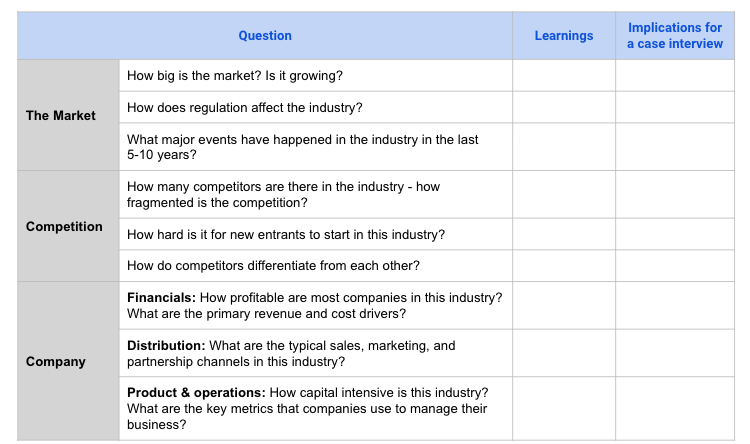
The framework below is what you will use to organize your knowledge. The idea is to fill in your answers over the course of your three hours of study. Further down in this post you can see what it looks like when completed for the CPG industry.
💡 Shameless plug: Our consulting interview prep can help build your skills
Read and consume CPG content (Top)
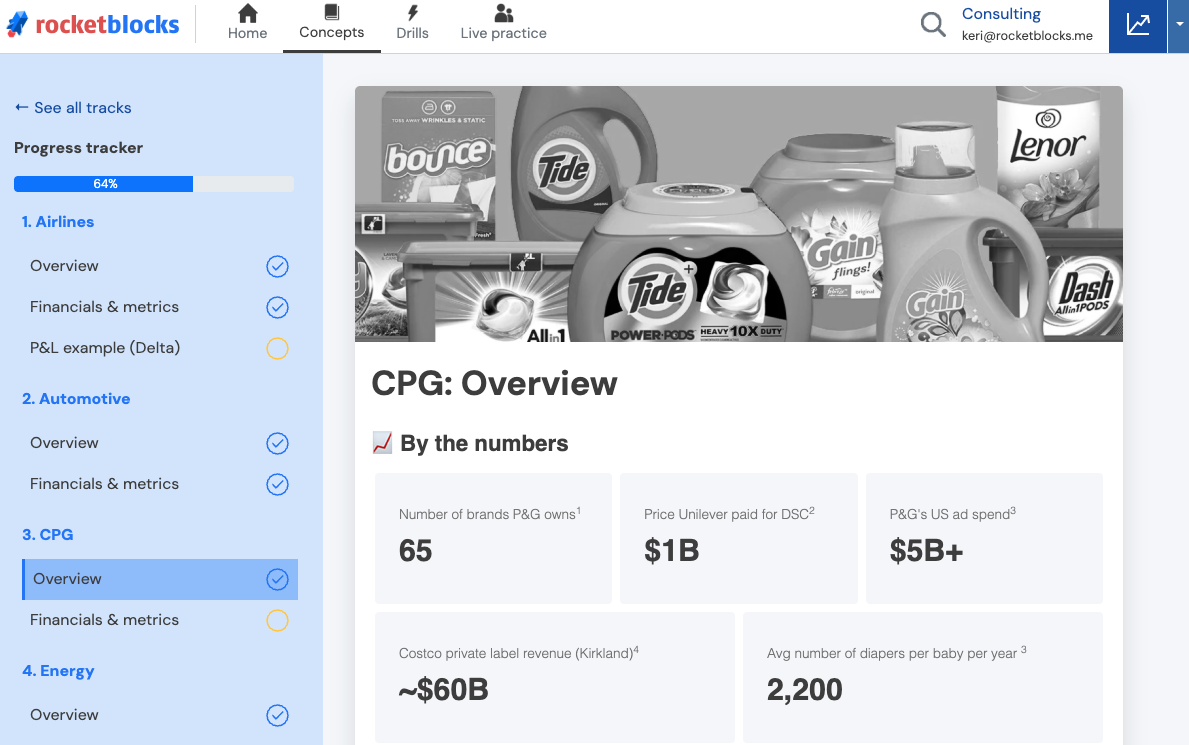
With a goal and a framework in hand, the best place to start is the industry overviews available as part of your RocketBlocks subscription. These overviews help establish your bearings on industries you are not super familiar with. To access them, log into the Consulting module, click Concepts in the header, and select Industry overview from the menu.
For CPG specifically, the overview covers top-line revenue numbers, recent events, and key industry metrics like share of shelf, average order value (AOV), and on-shelf availability (OSA). It also shares information on the major trends shaking up the industry at record pace, including health and wellness, sustainability, and direct-to-consumer.
From there, expand your research using resources like Wikipedia, the Wall Street Journal, and others. The key is to keep your framework questions in mind as you read and fill in your answers as you go. In 30 minutes of targeted reading you should be able to identify major CPG trends such as health and wellness, tariffs, and AI personalization, and have one to two talking points that may be relevant in an interview.
Practice actively and deliberately (Top)
Reading builds context, but you cannot learn to solve CPG problems by reading alone. At some point you need to turn your brain on and start actually practicing solving real industry problems.
CPG drills
Industry-specific drills are available under the Drills header in your RocketBlocks subscription. Here is a sampling of CPG drills that will sharpen your industry knowledge alongside other core skills:
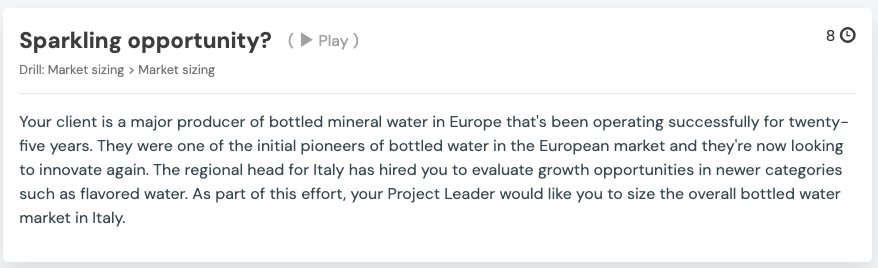
Market sizing: Sparkling opportunity? — A European bottled water company wants to innovate. Help them size the bottled water market in Italy.
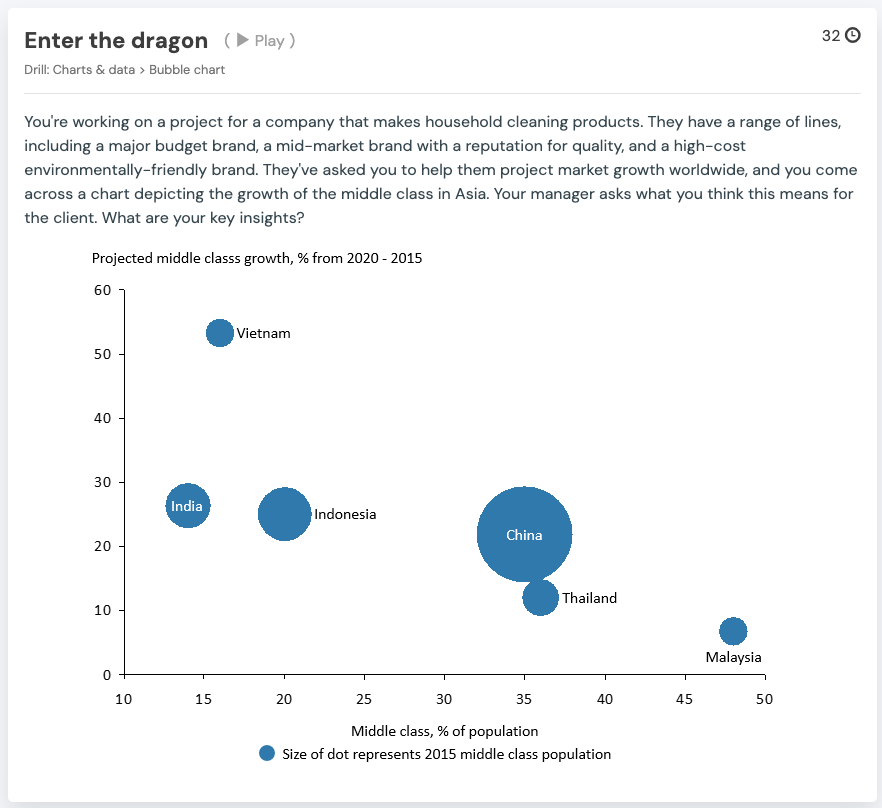
Charts and data: Enter the dragon — Help an environmentally friendly household cleaning products company project worldwide market growth.
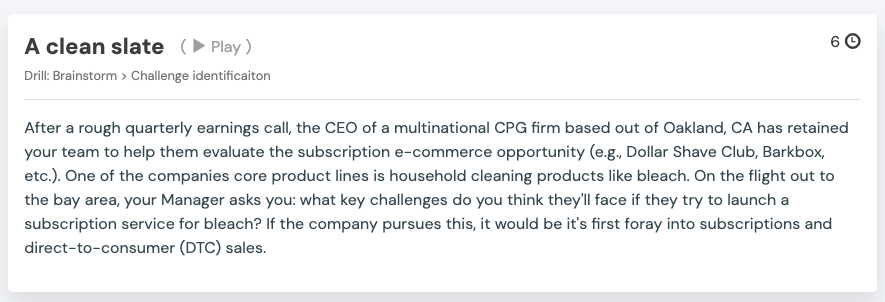
Brainstorm: A clean slate — A key CPG player is considering launching its first e-subscription service and has asked you to brainstorm the possible challenges of starting with a bleach subscription.
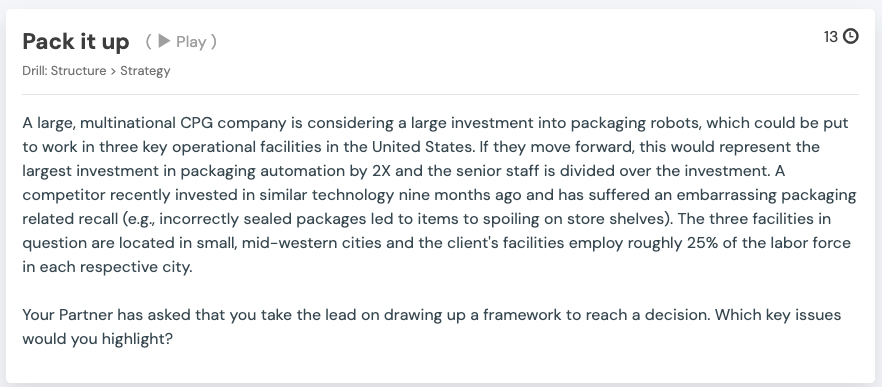
Structure: Pack it up — Draw up a framework for a global CPG company to help them decide whether or not to automate its packaging, potentially the largest investment of its kind by 2x.
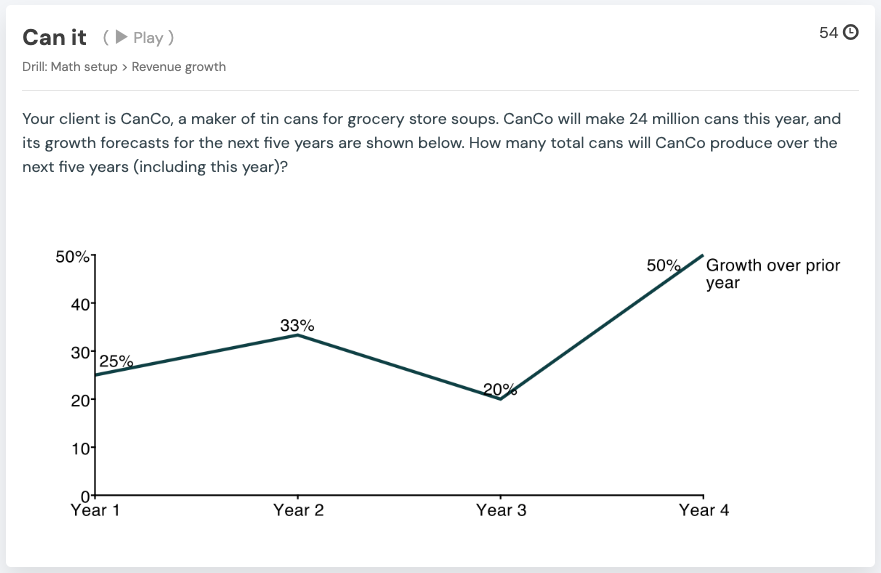
Math setup: Can it — A tin can manufacturer needs help forecasting growth. Help them figure out how many cans they will produce over the next five years.
Full CPG cases
Once you have worked through a few drills, the final step is seeing how this logic plays out in a full case conversation. For each of the three cases below you can access a 15-page peer practice PDF with sample expert answers, or work through a full drill-by-drill case (subscription required). For all three you can also watch two experts walk through the case live in a mock interview.
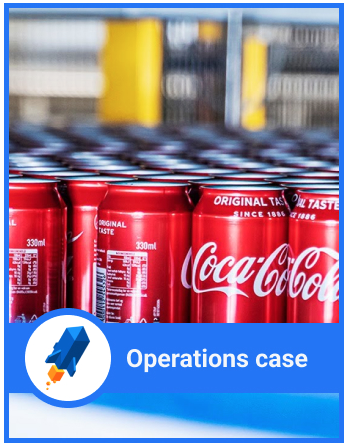
🏗️ Operations case interview - supply chain investigation
Click here to access the full PDF case and Expert mock video.
A global beverage manufacturer with 4,000+ products and 1,000 plants wants to improve efficiency. Help the team identify supply chain levers that could make an impactful difference.
For the expert mock, watch Matthew Calvert (ex-BCG Consultant) run Harshita Bidasaria (L.E.K. Consultant, Darden MBA) through this case featuring complex situations requiring tactical solutions.
Want to get coaching with Matthew? Book time on his RocketBlocks page.
🥛 Growth/profitability case interview - Nestlé
Click here to access the full PDF case and Expert mock video.
Nestlé faces slowing growth in its mature categories. Your team must identify new growth levers to return the company to its former annual growth rate of 3 to 4% without compromising its renowned quality and innovation.
For the expert mock, watch Abigail Doekson (ex-BCG Consultant) run Ben Wilson (ex-EY Parthenon) through this growth-focused case. Want to work with either of these experts?
Book time with Abby or book time with Ben.
🥤 Market entry case interview - Coca-Cola innovation
Click here to access the full PDF case and Expert mock video.
Modeled on Coca-Cola's failed launch of Coca-Cola Spiced, this case requires you to identify growth drivers in the highly competitive CPG sector, focusing on product portfolio management and market expansion.
For the expert mock, watch Ben Wilson (Director, Alvarez and Marsal) run Matthew Calvert (ex-BCG Consultant) through this market entry case. This case features multiple back-to-back exhibits, making it especially useful to see how an industry expert handles them.
Book time with Ben or book time with Matthew.
Consolidate your learnings (Top)
Do not stop once you have finished reading, completing drills, and walking through mock cases. You are now in a prime position to consolidate your learnings about CPG and make sure you are ready for a CPG case in an actual interview. This is an important step, and one that candidates too often skip.
See below for how a candidate might summarize their learnings using the framework introduced at the start of this post:
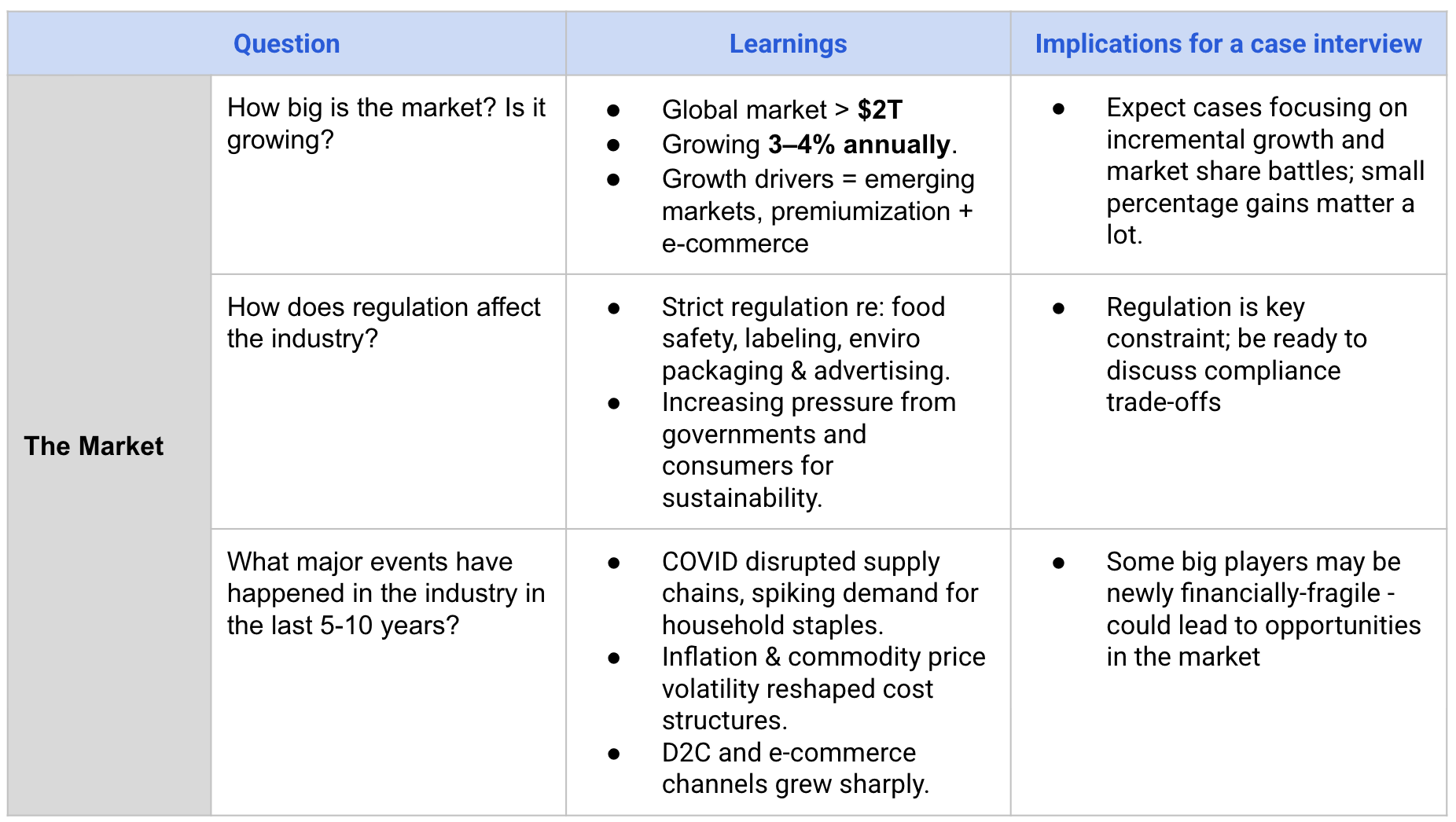
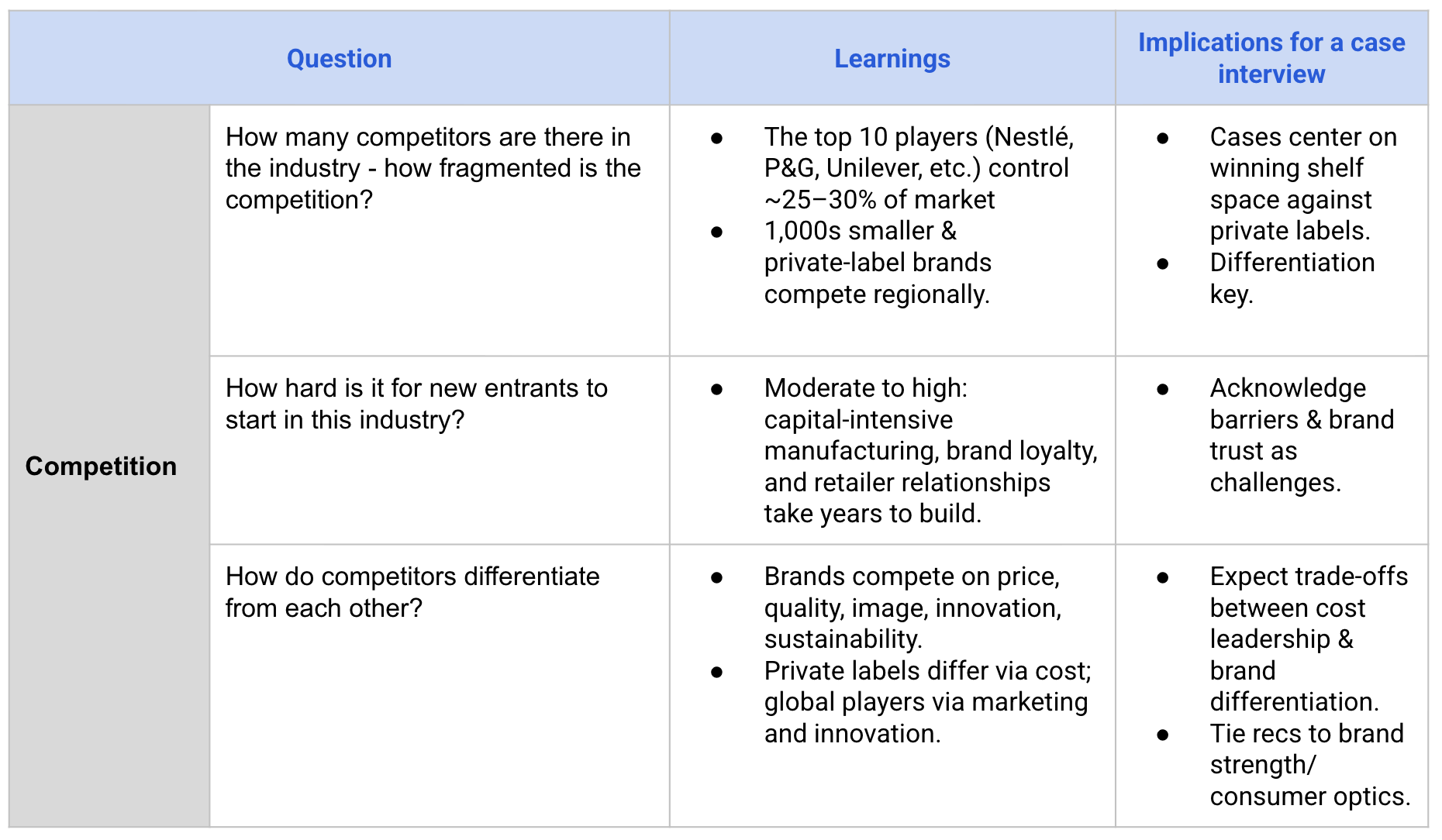
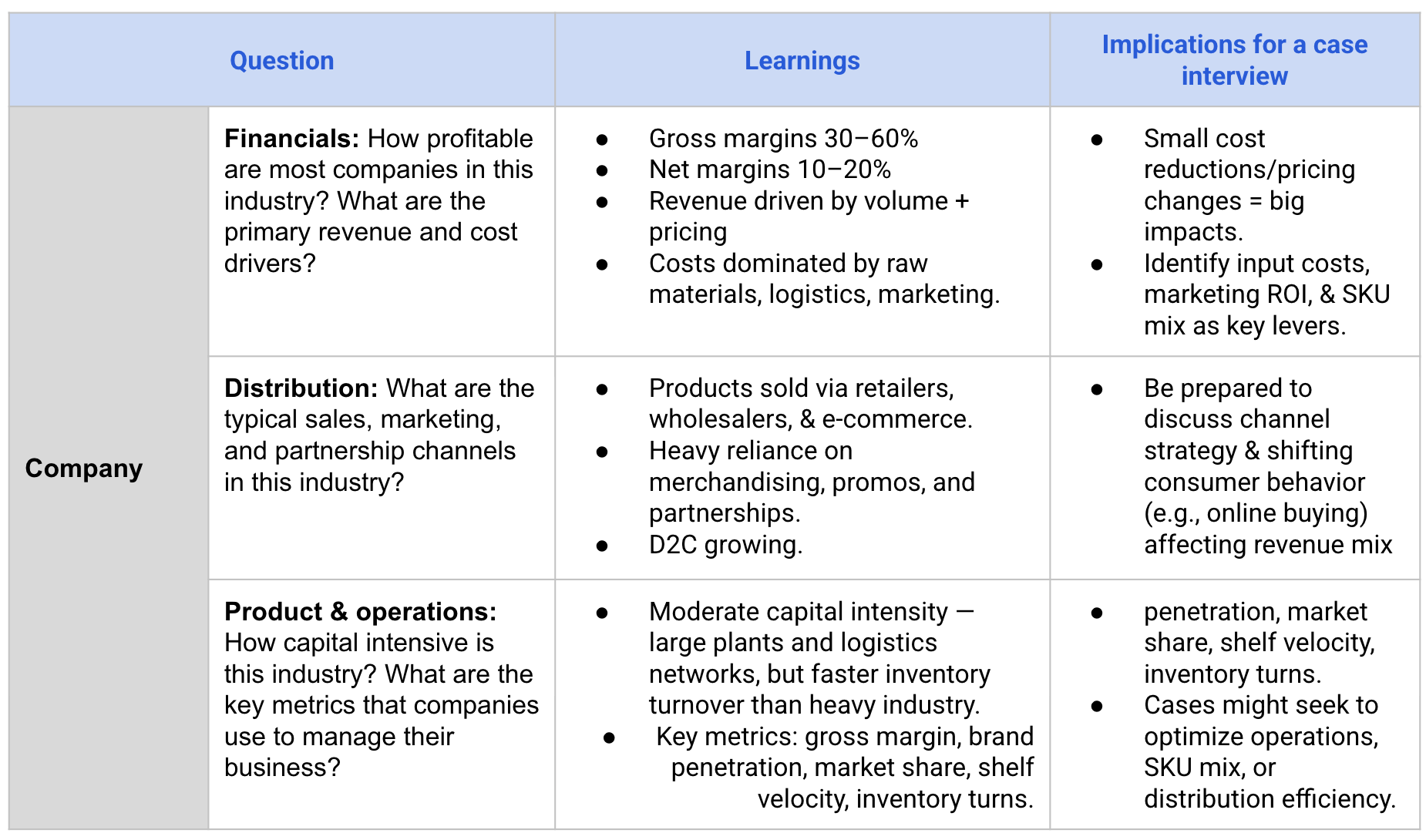
After just three hours of study on the CPG industry, you have a sense of how the industry works, recent events, and some jumping-off points for likely areas of focus during a case. You can enter your interview with a touch of confidence.
Read this next:
- Full cases from RocketBlocks
- The MECE principle
- Be a great mock interview partner
- How to build mental math skills
- Mock interview grading templates
- Example case interview prep plans
- Be authentic: advice from a Bain Consultant
- Don't be that candidate
- The Skill Building Loop for case interviews
- Recover from a math error
- Conclude a case interview well
- Acing Accenture's interview process
- How to use RocketBlocks
- Asking great questions in consulting interviews
- How to prep for fall consulting recruiting over the summer
- How to analyze charts in your consulting interview
- Profitability cases: beyond the formula
P.S. Are you preparing for consulting interviews?
Real interview drills. Sample answers from ex-McKinsey, BCG and Bain consultants. Plus technique overviews and premium 1-on-1 Expert coaching.


